Overgrown shrubs make a healthy yard look neglected. We shape hedges and foundation shrubs into clean, tight forms — and haul every clipping away when we're done.
Coastal Carolina landscaping leans on a familiar cast: azaleas, hollies, boxwoods, wax myrtles, Indian hawthorn, and loropetalum. Each has its own timing — azaleas set next spring's buds shortly after they bloom, so we shape them right after flowering, while fast growers like ligustrum and wax myrtle can take a tighter cut through the summer.
See the before-and-after hedge trimming project below for a closer look at our work.

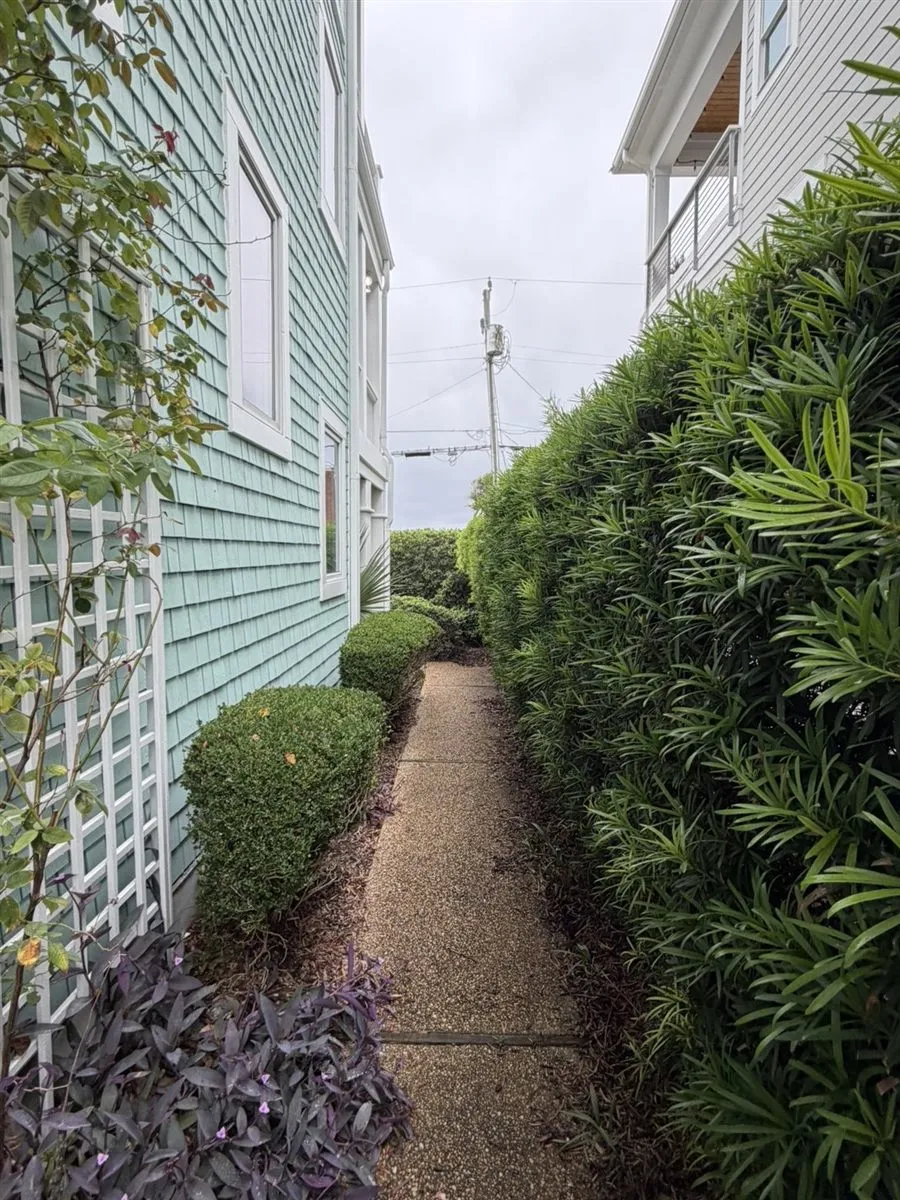
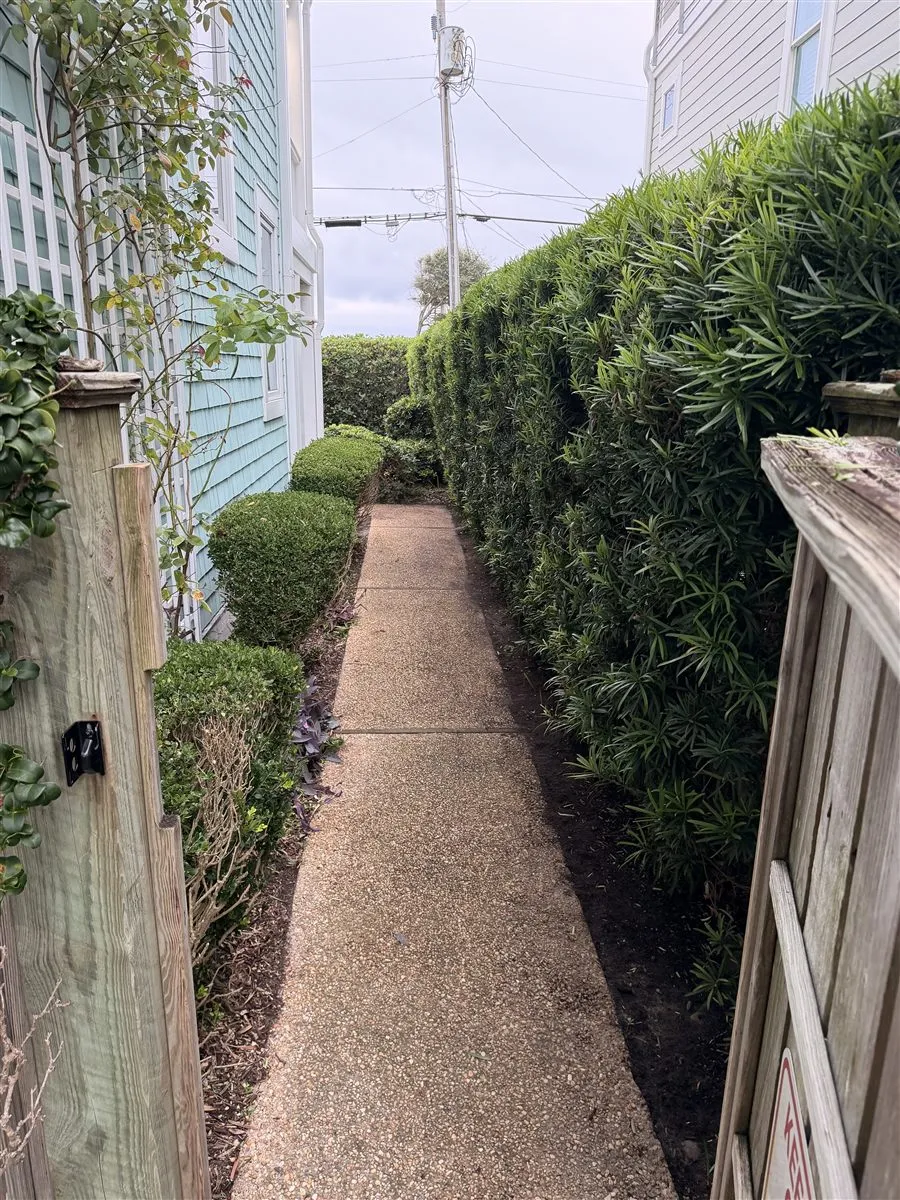
These photos show the same walkway beside the home, before and after hedge trimming. The finished view shows a neater hedge face and a clean path, while keeping the established greenery in place.


Planning a broader bed refresh? Ask us to quote mulch installation or pine straw installation alongside the trimming. Tell us which shrubs and beds need attention so your quote covers the work you want.
Quoted per job by hedge count, size, and how overgrown they are — confirmed before any work starts. Bundling with a mowing visit usually saves you money.
A seasonal touch-up and a two-year-overgrown recovery job are different animals, and we price them honestly. Tell us what you've got in the quote form — or just send photos by text — and we'll give you a straight number before we ever start.
Most formal hedges look best trimmed 2–3 times over the growing season. Spring-blooming shrubs like azaleas should be shaped once, right after they finish blooming.
Always. Cleanup and haul-away are included in every hedge job — your beds and lawn are left cleaner than we found them.
Usually, yes — most common coastal shrubs recover well from a hard cutback done at the right time of year. We'll tell you honestly if a shrub is too far gone to be worth it.
Free quote in about 60 seconds — no contracts, no pressure.
Get My Free Quote